
Sponsor research
How to research which sponsors your competitors work with
Published 12 September 2026Updated 16 September 20267 min read
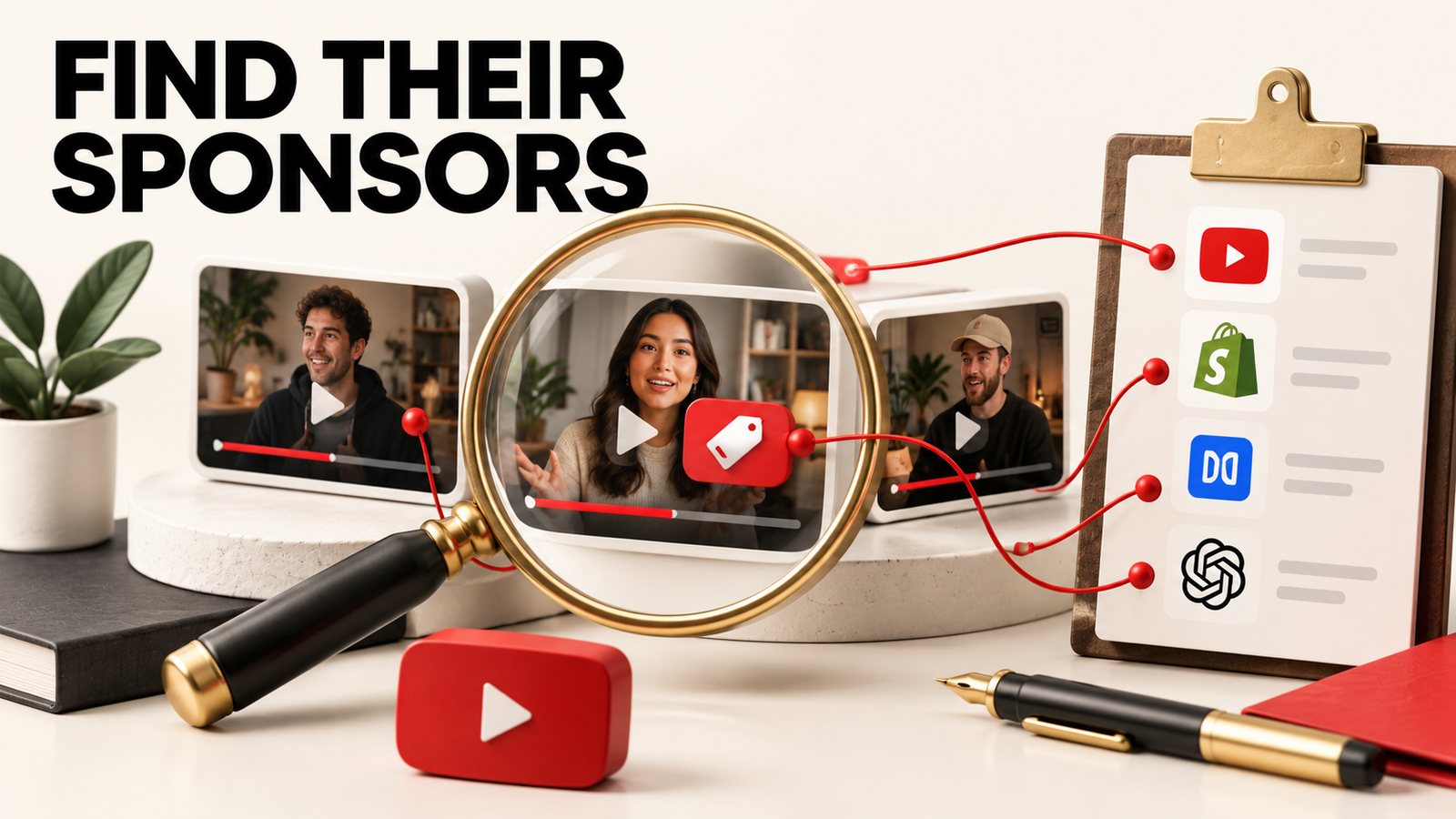
For a long time my approach to finding sponsors was to wait, hope, and occasionally send a hopeful email to a brand I admired. Then I spent one Sunday afternoon doing something deliberately boring. I opened a spreadsheet, listed twelve channels similar to mine, and watched or skimmed their last ten videos each, writing down every sponsor I found.
By the end I had 38 brands. Nine of them appeared more than three times. Those nine became my pitch list, and they are the reason my sponsorship income stopped being a lottery.
Why competitor sponsor research works so well
A brand that has already sponsored several creators in your niche has done three things you no longer have to do for them. They have approved a budget, they have decided YouTube works, and they have built an internal process for briefs, contracts and payment.
Pitching them is a completely different conversation from pitching a brand that has never worked with a creator. You are not selling the channel, you are selling the next slot.
The three places sponsors reveal themselves
Descriptions. Most sponsored videos say so in the first two lines, usually with a tracked link. This is the fastest signal to scan.
Spoken mentions. Plenty of integrations appear in the audio and nowhere else, particularly with smaller brands. Reading a transcript catches these far faster than watching. Our transcript extractor pulls the text of any video so you can search it for words like "sponsor", "thanks to", "code" or "use my link".
The paid promotion label. The overlay that appears at the start of a video confirms a paid relationship, even when the brand is only named in passing.
What to record for each brand
A useful row in the sheet has:
- Brand name and product category
- Which creator they sponsored, and that creator's approximate average views
- Date of the sponsored video
- Placement type, whether shout out, integration or dedicated video
- How many separate creators you have seen them book
- Contact name if you can find one
Two columns do the real work. Frequency tells you whether there is an ongoing programme. Recency tells you whether the budget still exists. A brand with six campaigns two years ago and nothing since has probably moved spend elsewhere.
Reading channel size signals
Pay attention to the size of the creators a brand books. Some only work with channels above a million subscribers, and pitching them at 20,000 wastes everyone's time. Others deliberately book smaller channels for better cost efficiency, and those are your best targets.
If a brand books creators across a wide range of sizes, that usually means a performance based programme with tracked links, which is often an easy door to walk through with a hybrid fee plus commission proposal.
Doing this without losing your Sunday
Manual research works, and it is slow. To speed it up, our sponsors leaderboard tracks detected sponsorships across thousands of channels, ranks brands by how many creator deals they appear in, and links through to the channels and videos where each sponsorship appeared. You can go from a blank page to a shortlist of active brands in your niche in a few minutes, then verify the best ones by hand.
Verification matters. Automated detection reads descriptions and transcripts, so it can occasionally flag a casual mention as a deal. Before you pitch, open the video and check with your own eyes.
Turning research into a reply
The research pays off in the first line of your email. Compare:
"Hi, I would love to work with you."
against
"Hi Sarah, I saw the integration you ran with [creator] in July. I make videos for a similar audience and have a relevant video going out on the 14th."
The second version proves you have done your homework, tells them the pitch is relevant, and gives them a reason to keep reading. That single sentence has done more for my reply rate than anything else I have tried.
Takeaways
- Build a sheet of brands active in your niche, tracking frequency and recency.
- Search transcripts, not just descriptions, to catch spoken only sponsorships.
- Target brands that book creators at your scale.
- Open every pitch by referencing a campaign they actually ran.
Closing
There is nothing glamorous about this work. It is a spreadsheet and an afternoon. But it replaced the part of my income that used to depend on being noticed, and replacing luck with a process is the most reliable upgrade a creator business can make.
Sources and further reading
The figures in this article are estimates based on publicly available data and personal experience. They are general information about creator earnings, not financial, legal, tax or medical advice, and they are not tailored to your circumstances. Speak to a qualified professional before making decisions based on them.



 YouTube earnings calculator
 Skool.com earnings leaderboard