
Compliance
Sponsorship disclosure rules every YouTube creator should know
Published 10 September 2026Updated 16 September 20267 min read
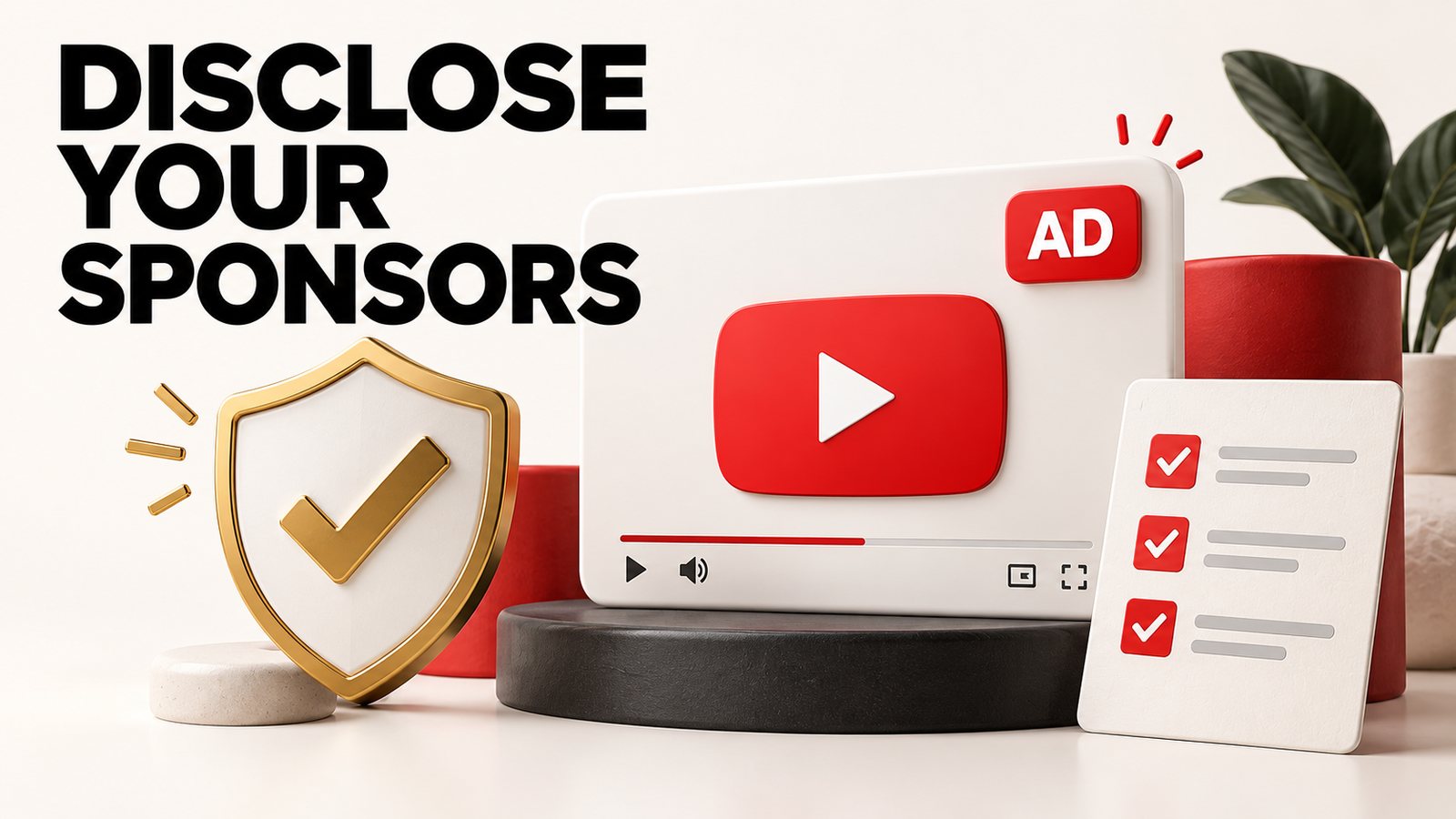
A friend of mine lost a partnership she had spent a year building. Not because of a bad video, or a missed deadline, but because a compliance review at the brand found that three of her videos disclosed the relationship only in the description, below the fold. The brand ended the contract to protect itself. She had not been trying to hide anything at all.
That story stays with me, because the fix costs eight seconds per video.
What actually counts as a material connection
Disclosure is not only about cash. In the eyes of regulators, you need to disclose when you have received anything of value that a viewer would reasonably want to know about. That includes:
- Payment for a placement or a dedicated video
- Free product, even if you were not asked to mention it
- Loaned equipment you keep for an extended period
- Free or discounted travel, accommodation or event access
- Affiliate commission links and discount codes that earn you money
- Equity, revenue share or an ambassador arrangement
- A personal or family relationship with the brand
If in doubt, disclose. I have never once regretted disclosing something I did not strictly have to.
The three places disclosure belongs
1. The YouTube paid promotion setting. In YouTube Studio, tick the box that says your video contains paid promotion. This displays a disclosure overlay at the start of playback. It is a required step under YouTube's own policy for paid product placement and endorsements, and it is separate from your legal obligations.
2. Spoken, early, in plain words. "This video is sponsored by X" or "X sent me this to try" within the first few seconds of the relevant section. Not at minute twelve, not in a fast mumble.
3. Written, above the fold. The first line of the description, before the "show more" cut, plus an on screen caption during the segment if you can manage it.
Clear language works best. "Sponsored by", "Paid partnership with", "Ad". Vague terms like "thanks to", "collab", "sp" or "in partnership with my friends at" have all been criticised by regulators for being unclear.
The rules in different places
In the United States, the Federal Trade Commission's endorsement guides require disclosures that are clear and conspicuous, hard to miss, and in the same medium as the claim. Their guidance is written for people, not lawyers, and it is worth reading directly.
In the United Kingdom, the Advertising Standards Authority and the Committee of Advertising Practice expect the advertising nature of content to be obvious before a viewer engages with it. In practice that usually means "Ad" or "Advertisement" prominently, and the ASA publishes rulings naming creators who get it wrong.
The European Union, Australia, Canada and India all have comparable regimes with their own specifics. If a meaningful share of your audience is in a particular country, spend an hour reading that country's guidance.
None of this is legal advice. It is what I have learned running my own channel, and rules change.
Categories that need extra care
Health, supplements, finance and anything involving children carry additional restrictions almost everywhere. With health content in particular, be careful not to present general information as individualised advice. Describing your own experience is not the same as telling a viewer what will happen to them, and claims about treating or preventing conditions are heavily regulated. Where you cite research, cite it properly, including a PMID or DOI so viewers can check the study themselves rather than taking your word for it.
Financial content often requires specific regulatory permissions for anything approaching advice. Saying "this is what I did, and it is not a recommendation" is a sensible habit, and in some jurisdictions a necessity.
A simple checklist before you publish
- Paid promotion box ticked in YouTube Studio
- Spoken disclosure within the first few seconds of the sponsored segment
- First line of the description states the relationship plainly
- On screen text during the segment if the edit allows
- Affiliate links marked as affiliate wherever they appear, including pinned comments
- Claims reviewed, especially in health and finance
- Same disclosure applied to the Shorts cut and the social repost
Takeaways
- Disclose anything of value you received, not just cash.
- Use all three surfaces, the setting, your voice and the description.
- Plain words beat clever ones, every time.
- Extra care in health, finance and children's content, and seek proper guidance where it is regulated.
Ending thought
Early on I worried that disclosure would make my recommendations feel less credible. The opposite happened. Saying "this is an ad, and here is exactly why I said yes to it" turned out to be one of the most trust building things I have ever done on camera.
Viewers do not resent honest advertising. They resent feeling tricked.
Sources and further reading
The figures in this article are estimates based on publicly available data and personal experience. They are general information about creator earnings, not financial, legal, tax or medical advice, and they are not tailored to your circumstances. Speak to a qualified professional before making decisions based on them.


 YouTube earnings calculator
 Skool.com earnings leaderboard