Brand deals
How to negotiate brand deals as a small YouTube channel
Published 26 August 2026Updated 16 September 20268 min read
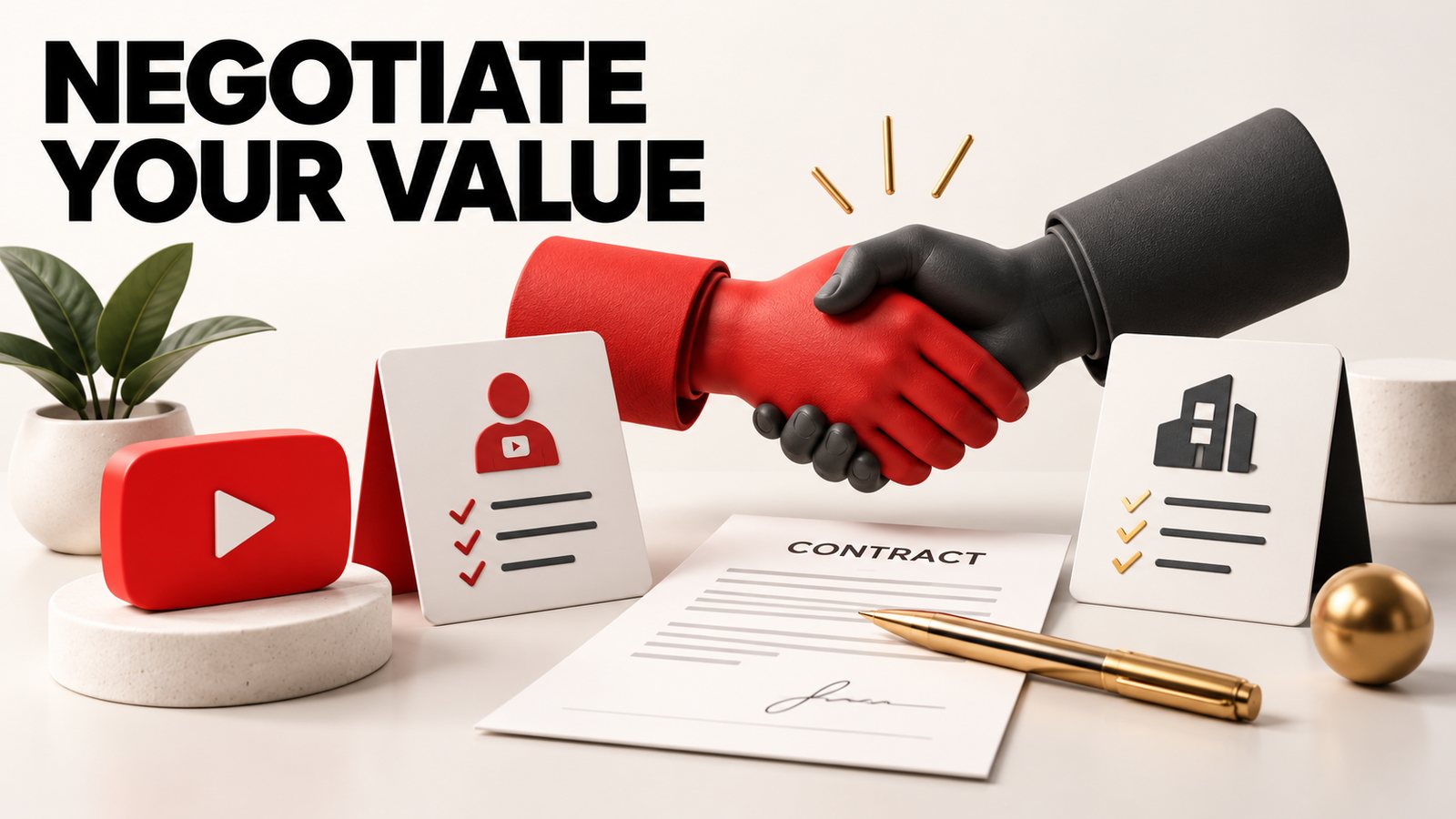
The email arrived on a Tuesday. A skincare brand loved my content, thought I was a perfect fit, and offered me free product plus $150 for a dedicated video. My rate at the time was closer to $900. What stung was not the number, it was the word "opportunity", used twice.
I did not reply that day. I made tea, I read it again, and I wrote something calm. Two weeks later they signed at $780. Nothing about my channel had changed in those two weeks. Only my approach had.
Rule one, do not lead with your price
When a brand asks for your rate, the temptation is to answer immediately and hope. Resist it. Reply with three questions instead:
- What does success look like for this campaign, and how will you measure it?
- What usage rights and timeline do you need, and will you run the content as paid media?
- Is this a one off or the start of a longer test?
Every answer moves the price. A brand planning six months of whitelisted ads is a fundamentally different deal from one wanting a single mention. I have doubled a quote on the strength of question two alone.
Rule two, sell what small channels are actually good at
Big channels sell reach. You are not going to win that argument, so do not have it. Small channels sell trust, and trust converts.
Bring evidence:
- Average view duration and how it compares to your niche
- Comment sentiment on past recommendations, quoted directly
- Click through and conversion data from a past affiliate link
- Audience match, using your top countries, age band and interests
The line I use is simple. "My audience is smaller than the creators you usually book, and they buy. Here is the data from the last product I recommended."
Rule three, counter with a reason
A counter offer without a reason feels like haggling. A counter offer with a reason feels like professional pricing. Compare these two replies.
Weak: "Sorry, that is too low for me. Can you do more?"
Strong: "Thanks for the detail. Based on a median of 42,000 views in the first 30 days, six months of usage rights and category exclusivity for the campaign window, my fee for this package is $780. If budget is fixed at $150, I can offer a 20 second shout out with no usage rights, which fits that level."
The second reply does three things. It anchors on data, it keeps the relationship warm, and it offers a smaller package instead of a discount. Protecting your rate while offering a lighter deliverable is the single most useful negotiation move I know.
Contract terms that quietly cost you money
- Perpetual usage. Cap it. Six or twelve months is reasonable, and renewals are new revenue.
- Unlimited revisions. Specify two rounds, with extra rounds billed hourly.
- Broad exclusivity. "No competitor content" should be defined narrowly and time boxed, or you are locked out of an entire category for free.
- Payment terms. Net 30 is fine, net 90 is a loan you did not agree to make. Ask for 50 percent up front on first time partners.
- Approval rights over your whole video. A brand should approve their segment, not your editorial.
If a term feels uncomfortable, say so plainly. "I am not able to grant perpetual rights, I can offer twelve months" is a complete sentence and nobody has ever ended a deal with me over it.
When to walk away
I walk when a brand will not put anything in writing, when they demand exclusivity without paying for it, or when they push a product I would not use myself. The last one is not moral posturing, it is commercial. An audience forgives a boring sponsor and remembers a bad one for years.
Before saying yes, it is worth researching who else the brand has worked with. Our sponsors leaderboard shows which brands are actively running creator campaigns and which creators they book, which tells you a lot about their budget and their behaviour.
Takeaways
- Ask questions before quoting, always.
- Price on median views, usage and exclusivity, not on hope.
- Counter with a reason, or offer a smaller package instead of a discount.
- Read the usage, revision and payment clauses twice.
Ending thought
Negotiation felt confrontational to me for a long time, until I reframed it. You are not fighting the brand. You are both trying to find the version of this project that is worth doing for each side. Say your number kindly, explain it clearly, and be genuinely willing to hear no.
The deals I lost by holding my rate were the deals that made the next ones possible.
Sources and further reading
The figures in this article are estimates based on publicly available data and personal experience. They are general information about creator earnings, not financial, legal, tax or medical advice, and they are not tailored to your circumstances. Speak to a qualified professional before making decisions based on them.


 YouTube earnings calculator
 Skool.com earnings leaderboard