
Brand deals
The YouTube media kit that finally started winning deals
Published 2 September 2026Updated 16 September 20267 min read
I spent an entire weekend on my first media kit. Nine pages, custom illustrations, a page about my creative philosophy. I sent it to fourteen brands and heard back from one, who asked for my rates, which were on page eight.
Some months later I rebuilt it as a single page with the price on it. The reply rate went up so sharply that I felt slightly foolish about the weekend.
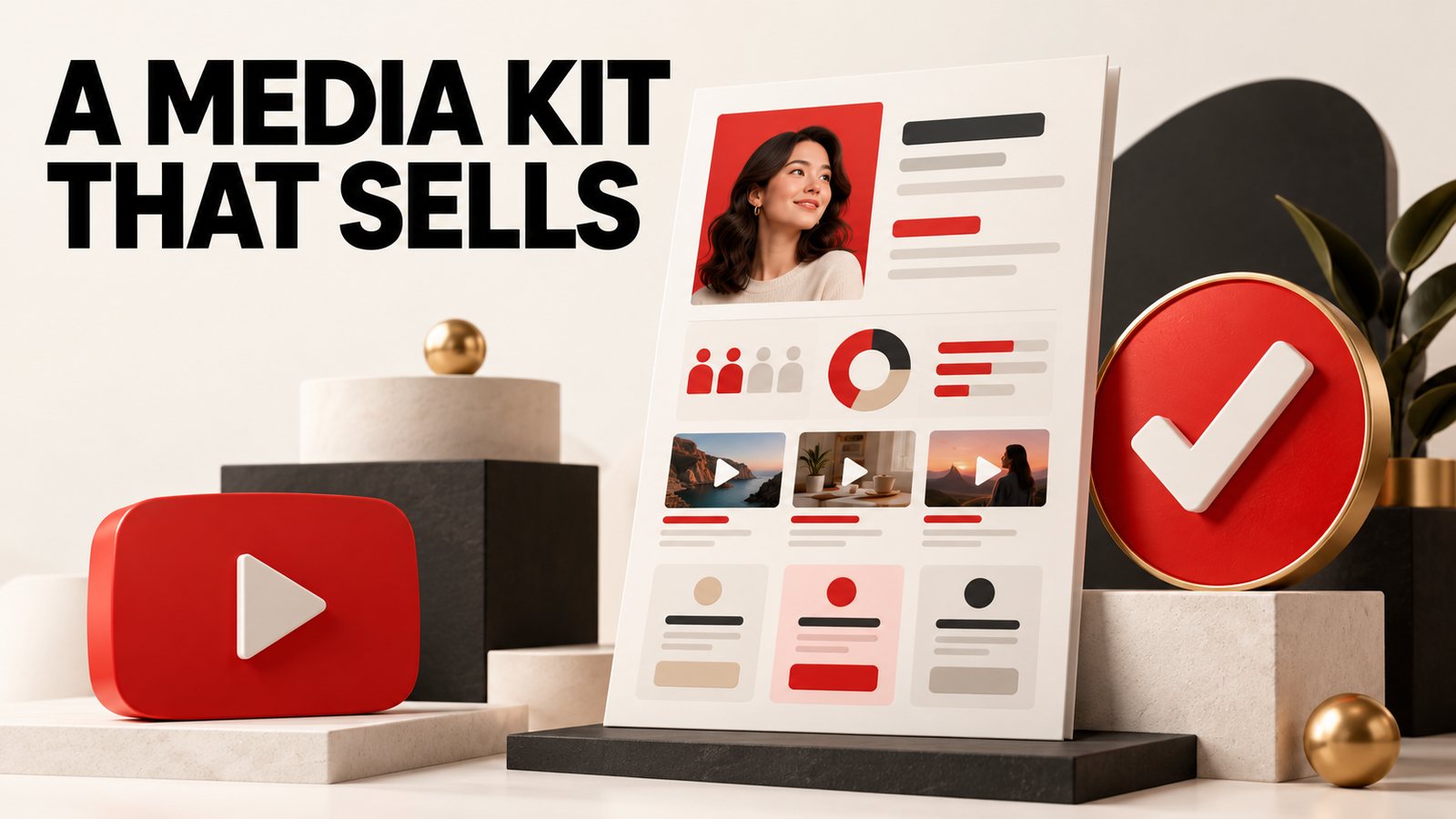
If you are putting together a YouTube media kit for brand deals, here is the structure that works, and the reasons behind each block.
The header, three seconds of attention
Channel name, handle, one line on what you make and for whom, subscriber count, average views per video, and a single photograph or thumbnail grid. That is it. The person reading this is deciding whether to keep reading.
The one line matters more than everything else on the page. "I help first time home buyers in the UK understand mortgages" tells a brand exactly which products fit. "Lifestyle and vibes" tells them nothing.
Audience, quality over size
Brands are trying to work out whether their customer is watching. Give them:
- Average views in the first 30 days, and the median too if they differ a lot
- Average view duration and percentage viewed
- Top five countries with percentages
- Age and gender split
- Subscriber versus non subscriber split, which shows discovery health
If a number is unflattering, leave it out rather than dressing it up. Nobody expects perfection, but an inflated figure discovered later ends the relationship.
Proof, the block most creators skip
This is where deals are actually won. One short case study with a real outcome:
"Sponsored integration for a budgeting app, March. 51,000 views in 30 days, 2,140 link clicks, 310 trial signups at a cost per signup of 6.80 dollars, which beat their paid social benchmark."
If you have never run a sponsorship, use an affiliate link or your own product launch. Any measured outcome beats none. If you genuinely have nothing, offer a first campaign at a fair rate with tracking agreed up front, and tell the brand you are building this exact data.
Packages and pricing
List two or three packages with what is included and a starting price.
- Integration: 60 to 90 seconds inside a main video, one revision round, three months usage, from $X
- Dedicated video: full video built around the product, two revision rounds, six months usage, from $Y
- Bundle: integration plus a Short plus an Instagram cut, from $Z
Publishing a starting price feels risky. In practice it removes weeks of pointless conversation with brands who were never going to pay you, and it signals that you have done this before.
Formats and turnaround
Give a realistic lead time, your revision policy and what you need from the brand, such as product access, brief and key talking points. A creator who explains their process looks like a safe bet.
Contact and links
Email, preferred timezone, and links to two or three of your best performing relevant videos. Link a public earnings or performance page if you have one, so brands can verify your scale independently. Many creators send their channel earnings report page as a neutral third party reference point.
Small details that made a difference for me
- Save it as a PDF and also as a link, because some brands cannot open attachments.
- Name the file properly. "MediaKit_ChannelName_Q3_2026.pdf" beats "final_v4.pdf".
- Put your rate in the email body as well. Do not make anyone hunt.
- Refresh the numbers every quarter and note the date on the page.
Takeaways
- One page, skimmable, with prices on it.
- Lead with audience fit and a measured result.
- Be honest with weak numbers and strong with the story around them.
- Treat the media kit as a living document, not a weekend art project.
Closing
The point of a media kit is not to impress anyone. It is to make saying yes easy for a busy person with a budget and a deadline. Once I stopped trying to be impressive and started trying to be useful, the replies came.
Sources and further reading
The figures in this article are estimates based on publicly available data and personal experience. They are general information about creator earnings, not financial, legal, tax or medical advice, and they are not tailored to your circumstances. Speak to a qualified professional before making decisions based on them.



 YouTube earnings calculator
 Skool.com earnings leaderboard