
Sponsor research
How to find YouTube sponsors that actually pay well
Published 4 September 2026Updated 16 September 20268 min read
For my first eighteen months I waited. I put a business email in my description and assumed that if the channel grew, brands would arrive. Some did, and almost all of them were low budget or a poor fit.
The week I changed approach, I built a list of forty companies that were already sponsoring channels like mine, wrote each of them a short specific email, and sent them over five days. Six replied. Two turned into paid campaigns, one of which became a recurring partner for a year. Waiting had cost me more than a year of income.
Start with brands that are already spending
The single most useful filter is whether a company already pays creators. A brand with an existing creator budget does not need convincing that YouTube works, which removes the hardest part of the sale.
Ways to find them:
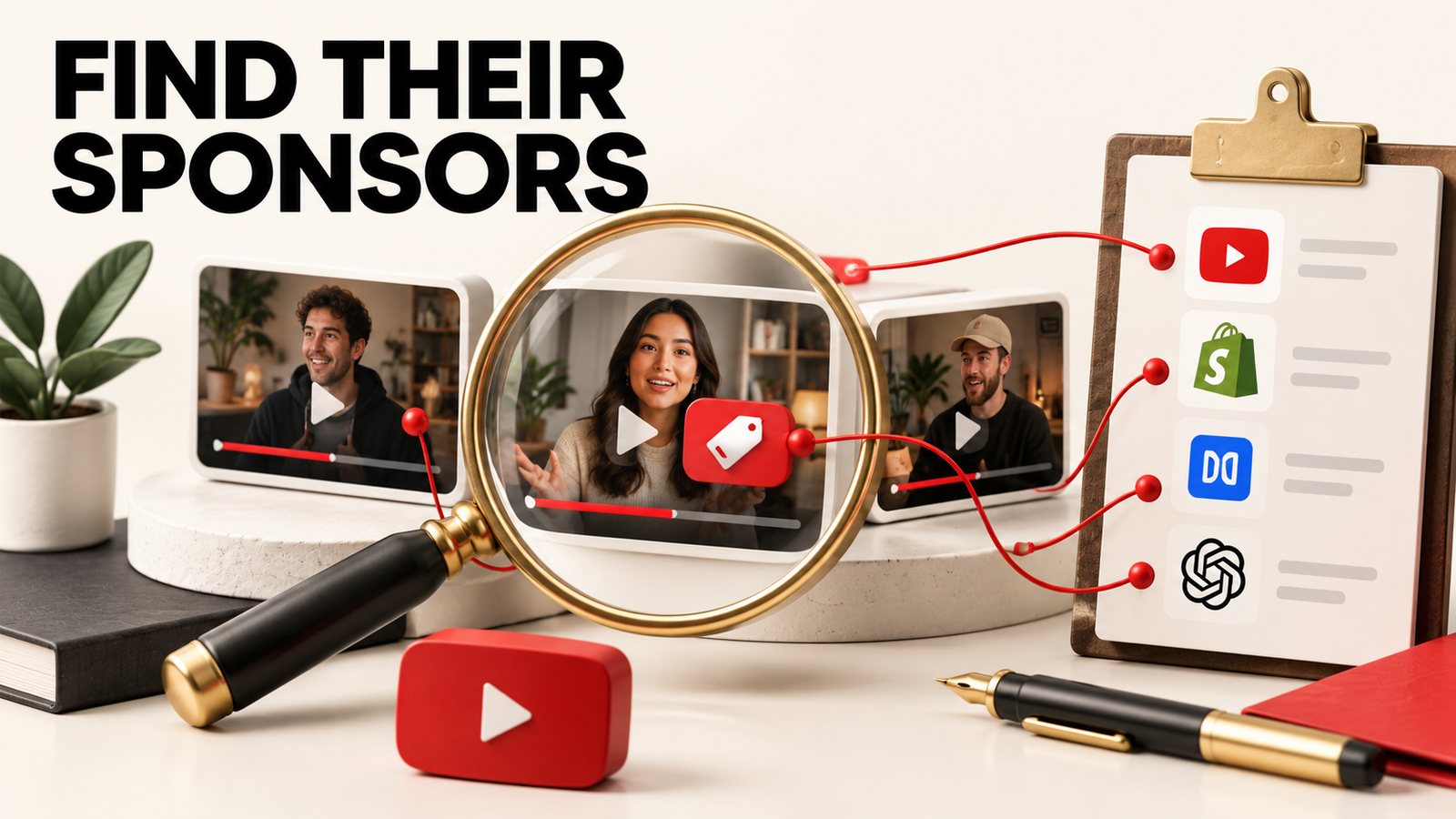
- Watch ten recent videos from five channels in your niche and note every sponsor mentioned.
- Search your topic plus "sponsored by" and skim the descriptions.
- Check which brands appear repeatedly across different channel sizes, since that pattern means an ongoing programme rather than a one off test.
- Use a sponsor database. Our sponsors leaderboard tracks brands running creator campaigns and shows which channels they have worked with, which turns an afternoon of manual watching into a five minute list.
Repeat sponsors are the goal. A brand on its fourth creator campaign has a working process, an approved budget and a person whose job depends on finding more creators.
Categories that tend to pay properly
- Software and apps with a monthly subscription
- Online courses and certification providers
- Financial services, brokers and insurance, where regulation allows
- Meal kits, supplements and subscription boxes, with careful claim handling
- Gaming and hardware for the right audience
- Anything with a high customer lifetime value
Physical products with slim margins rarely have the room to pay well, and they will often push for affiliate only arrangements. That is not always bad, but it should be a choice rather than a default.
A note on health and supplement brands. If you take one of these deals, keep your language careful. Describing a personal experience is fine, implying a treatment outcome is not, and general information is never a substitute for someone's own clinician. Regulators pay close attention to this category, and so do audiences.
Finding the right person
The generic contact address is where pitches go to die. Look for the influencer marketing manager, partnerships lead, creator programme manager or performance marketing manager. Company LinkedIn pages, the team page on the website and the reply address on their newsletter all work.
If you can only find a general address, send it anyway with a subject line that helps it get forwarded: "Creator partnership enquiry for [product], 42k views per video, [niche] audience".
The pitch email that works for me
Short, specific, evidence first.
Subject: [Product] integration for a 42k view [niche] channel
Hi [Name], I make videos about [topic] for [audience], averaging 42,000 views in the first 30 days. I noticed you sponsored [creator] in June, and my audience overlaps with theirs closely.
Last quarter I ran an integration for [similar brand] which produced 2,140 clicks and 310 trial signups from one video.
I have a video planned for [date] on [specific topic] where [product] fits naturally. A 90 second integration with six months usage would be $X.
Happy to send the full media kit if useful.
[Name], [channel link]
Five short paragraphs. No life story, no attachments in the first email, one clear price, one clear next step.
Follow up, politely and twice
Most replies I get come from the second email. Wait five working days, reply in the same thread, add one new piece of information such as a recent video's performance. If the second follow up goes unanswered, move on and try again next quarter. People change roles and budgets reset.
Keep a simple tracker with company, contact, date sent, follow up dates and outcome. Forty pitches feel like a lot until they are in a spreadsheet, at which point they feel like a pipeline.
Takeaways
- Target brands with proven creator spend rather than dream brands with no programme.
- Reference a specific campaign of theirs in the first line.
- Lead with a result, name a price, propose a date.
- Follow up twice, track everything, repeat quarterly.
Closing thought
Outreach felt like begging until I reframed it as offering a media placement that happens to be excellent value. Nobody is doing you a favour by sponsoring your video. You are selling attention that they cannot buy anywhere else in quite the same way.
Send the email. The worst outcome is silence, and silence is where you already are.
Sources and further reading
The figures in this article are estimates based on publicly available data and personal experience. They are general information about creator earnings, not financial, legal, tax or medical advice, and they are not tailored to your circumstances. Speak to a qualified professional before making decisions based on them.


 YouTube earnings calculator
 Skool.com earnings leaderboard